Why More Drivers Are Choosing Paint Protection Film
Paint Protection Film (PPF) has become one of the most popular ways to help preserve a vehicle’s appearance and reduce visible wear from everyday driving. Whether it’s highway debris, rock chips, bug splatter, or long-term exposure to the elements, PPF adds a durable protective layer over painted surfaces that are most vulnerable to damage.
Many drivers choose PPF shortly after purchasing a new vehicle, especially if they plan to keep it long-term or want to maintain the condition of the paint over time. It’s also popular on luxury vehicles, trucks, sports cars, and daily drivers that spend a lot of time on the road.
But one of the biggest decisions isn’t just whether to get PPF, it’s where to get it installed.
Because installation quality plays such a major role in how PPF looks and performs, choosing the right installer is just as important as choosing the film itself.
What to Look for in a PPF Installer
Not all paint protection film installations are the same. Proper surface preparation, film alignment, and installation technique all affect the final appearance and long-term durability of the film.
When comparing installers, it’s important to look at their experience, customer reviews, warranty coverage, and the quality of film they use. Professional installers often use software-cut patterns designed specifically for each vehicle, which can improve fitment and reduce unnecessary cutting directly on the paint surface.
Cleanliness also matters. Dust, debris, and improper preparation can affect how the film adheres and may become visible after installation.
Experienced shops like Tint World offer professionally installed XPEL paint protection film solutions designed to help protect against rock chips, road debris, and everyday wear.
Types of Paint Protection Film Coverage
Paint protection film can be customized depending on the driver’s goals, budget, and how much of the vehicle they want to protect.
Partial front coverage is often chosen as an entry-level option and typically covers areas like portions of the hood and bumper. Full front coverage extends protection across the entire hood, bumper, fenders, and mirrors for more complete front-end protection.
Some drivers choose full-body PPF coverage for maximum paint preservation, especially on luxury vehicles, sports cars, or vehicles they plan to keep long-term.
Targeted protection for vulnerable areas like rocker panels, door edges, and rear wheel arches is also common. A professional installer can help recommend the right coverage package based on driving habits and the areas most likely to experience wear.
DIY vs Professional PPF Installation
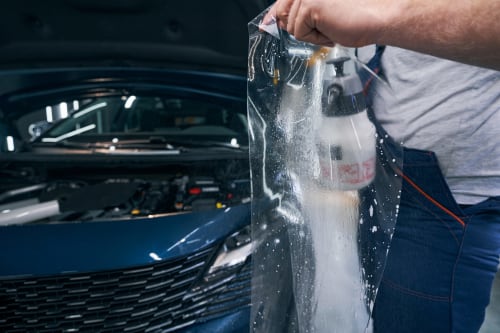
DIY paint protection film kits are available online, but installation is often more difficult than many people expect.
Applying PPF properly requires precision, especially around curved panels, bumpers, mirrors, and tight edges. Improper installation may lead to bubbling, lifting, trapped debris, wrinkles, or uneven alignment.
Professional installation generally provides cleaner results and longer-lasting performance. Experienced installers use specialized tools and techniques designed to improve film fitment, appearance, and durability.
Because PPF is designed as a long-term investment in the appearance of the vehicle, many drivers prefer professional installation over DIY application.
Questions to Ask Before Getting PPF
Before scheduling installation, it’s helpful to ask a few questions about the film, warranty coverage, and available protection packages.
Drivers should also ask whether paint correction or additional surface preparation is recommended before installation, especially if the vehicle already has swirl marks or paint imperfections.
Reviewing previous installation work and customer reviews can also help provide confidence in the installer’s experience and quality standards.
Where to Get Paint Protection Film Near You
Paint protection film is commonly available through professional automotive restyling shops, detail studios, and window tint specialists that offer vehicle protection services.
Choosing an experienced installer is important because even high-quality film may not perform properly if installation is poor.
Professional shops like Tint World offer professionally installed PPF solutions designed to help preserve vehicle paint while maintaining a clean, nearly invisible appearance.
Many locations also offer additional protection services like ceramic coating, window tint, and detailing, allowing drivers to combine multiple appearance and protection upgrades during the same visit.
Frequently Asked Questions
How much does paint protection film cost?
Pricing varies depending on the vehicle size, coverage package, film type, and installation complexity. Full-body coverage generally costs more than partial front protection because of the additional material and labor involved.
Can I install paint protection film myself?
DIY kits are available, but proper installation can be difficult without experience. Many drivers choose professional installation for cleaner results and longer-lasting performance.
Is paint protection film worth it?
Many drivers choose PPF because it helps reduce visible paint damage from road debris, rock chips, bug splatter, and everyday wear while helping preserve the appearance of the vehicle over time.
What areas of the vehicle should be protected?
The most commonly protected areas are the front bumper, hood, fenders, mirrors, rocker panels, and door edges since these surfaces are most exposed to debris and road wear.
How long does PPF last?
The lifespan of paint protection film depends on factors such as film quality, installation quality, climate, and maintenance habits. Professionally installed premium films are designed for long-term durability.
Can PPF be combined with ceramic coating?
Yes. Many vehicle owners pair PPF with ceramic coating for additional surface protection, easier cleaning, and improved water beading.